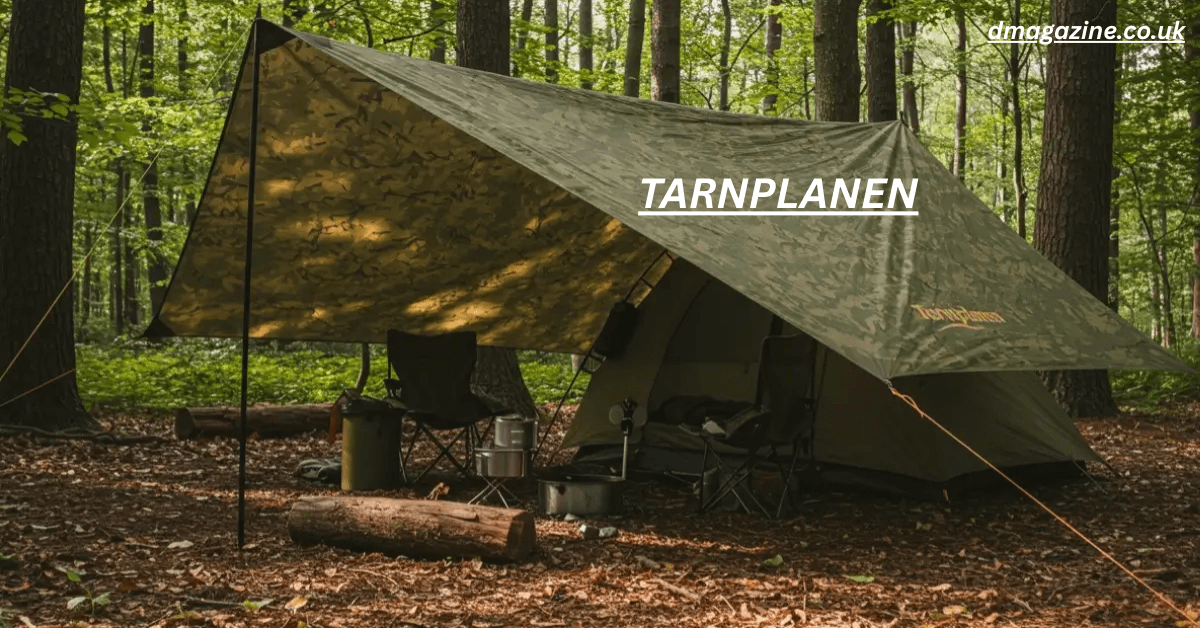
If you’ve spent time outdoors, read military‑gear roundups, or follow adventure travel blogs, you may have seen the word Tarnplanen crop up more and more. It’s a German compound — Tarn (camouflage) + Planen (tarpaulins) — used to describe camouflage tarpaulins designed for concealment and protective shelter. In practice, Tarnplanen are multifunctional: they act as weatherproof covers, stealth shelters, equipment hides, and even emergency field canvases for first‑response teams.
Over recent years, these tarps have moved beyond strictly military inventory into expedition checklists, festival kits, wildlife photographers’ toolboxes, and overlanding rigs. In this comprehensive guide, we walk you through everything: historical roots, material science, field applications, buying and setup advice, legal and ethical considerations, market trends — and where the technology is heading.
What Is Tarnplanen?
Origin and Meaning of the Term
Tarnplanen is simply the German word for “camouflage tarpaulins.” Tarn means “camouflage” or “concealment,” and Planen means “tarpaulins” or “covers/sheets.” Together, Tarnplanen refers to camo‑printed tarpaulins intended for concealment and protective covering.
While tarps are common worldwide, the term Tarnplanen reflects a heritage rooted in European — particularly Germanic — military systems. Over time, the phrase has entered English‑speaking outdoor communities as a shorthand for camo tarps optimized for stealth, weather resistance, and utility.
Difference Between Tarnplanen and Regular Tarps
At its simplest: every Tarnplanen is a tarp, but not every tarp is a Tarnplanen. Key distinguishing factors:
- Camouflage patterning — Tarnplanen often feature woodland, desert, urban or multispectral patterns, rather than plain colours.
- Purpose-built for concealment + protection — beyond just covering gear or shelter, Tarnplanen are engineered to reduce visual (or even infrared) signature, making them suitable for stealth, fieldcraft, photography hides, or tactical uses.
- Material and build quality — they tend toward more durable, weather‑resistant, reinforced fabrics and construction, compared with cheap general-purpose tarps.
Because of these traits, Tarnplanen often command a premium over basic tarpaulins and are valued by outdoor, tactical, and professional users.
Why Tarnplanen Matters for Outdoor and Tactical Use
Whether you’re into overlanding, wildlife photography, primitive camping, or disaster-preparedness, Tarnplanen bring together several advantages:
- Low‑profile concealment: blending into terrain, reducing detection by humans or animals.
- Versatility: Can be used as ground sheets, shelters, gear covers, or makeshift hides.
- Weather and environmental protection: waterproofing, UV resistance, abrasion resistance — useful in rain, wind, sun, or rough terrain.
- Portability: many models remain compact enough for backpacking or motorcycle/overland travel.
For those reasons, Tarnplanen has become a go‑to gear item for campers, survivalists, photographers, and even first responders.
History and Evolution of Tarnplanen
Military Origins in Germany and Europe
Camouflage tarps trace their lineage back to early 20th‑century military concealment efforts. As armies realized that blending a person or object into the terrain provided tactical advantages, specific fabrics and patterns were developed. The German term Tarnplanen reflects that lineage: Germany — with its long history of military textile innovation — produced many early camo tarps, shelter halves, and canvas covers that influenced broader NATO-era tarp and shelter systems.
Beyond Germany, other European militaries adopted and adapted these tarpaulins: for example, the Swiss military produced camouflaged shelter halves and tarpaulins (often called “Militärblachen”), used for rain protection, bivouacs, and camouflaging equipment.
These military-grade tarps were usually made from heavy cotton canvas (or chemically treated cotton), with reinforced seams, button or eyelet systems to join multiple sheets, and cords/poles for erecting temporary shelters. For instance, older Swiss Militärblachen were around 165 cm square, made of chemically treated cotton, with double‑row attachment loops — and weighed around 1.25 kg dry.
Transition to Civilian and Outdoor Applications
As post–Cold War surplus gear entered civilian markets, campers, hikers, overland travelers, and survivalists discovered the value of such tarps. The same qualities — concealment, waterproofing, durability — that made them valuable in military contexts translated well for wilderness or field use.
Over time, manufacturers began producing civilian‑targeted camouflage tarps, often using lighter, synthetic fabrics (nylon, polyester, PVC‑coated weaves) instead of heavy canvas. Patterns expanded beyond traditional woodland or field camo to desert, urban, or digital designs, catering to different terrains and climates.
Today’s Tarnplanen are as likely to appear in a bushcraft kit or overlanding rig as in a surplus store.
Advances in Materials and Camouflage Patterns Over Time
From heavy canvas and painted‑on patterns, Tarnplanen have evolved with advances in textile engineering. Modern versions often use ripstop nylon or polyester, coated with PU/PVC for waterproofing and UV resistance; some newer models even claim multispectral or near-infrared (NIR) masking for reduced detectability to night‑vision or imaging gear.
This evolution mirrors broader trends in tarpaulin and tent markets: lighter materials, better weather sealing, improved strength-to-weight ratios, and treatments for UV and abrasion resistance.
As tarpaulin demand grew globally, the tarpaulin market (including protective tarps, industrial covers, and camping tarps) expanded significantly.
Materials, Design, and Technical Features
Understanding what goes into a good Tarnplanen helps you choose the right tarp for your needs. Here are the key technical specs and what they mean.
Common Fabrics: Ripstop Nylon, Canvas, PVC, Polyester
- Ripstop Nylon / Polyester: These are lightweight, tear-resistant fabrics with a special weave that prevents small rips from propagating. Ripstop tarps are popular for backpacking, overlanding, and situations where pack size and weight matter.
- Canvas (treated cotton): Traditional, heavy-duty, and durable. Canvas tarps offer breathability (less condensation) and ruggedness — great for long-term shelters — though they are heavier and bulkier.
- PVC‑coated tarps: Heavy-duty, highly weather-resistant, often used for groundsheet, vehicle cover, or long-term outdoor storage. PVC coating adds waterproofing, UV resistance, and abrasion resistance.
- Polyethylene (PE) tarps: Sometimes used for budget tarps; more common in industrial or agricultural use than high-quality camouflage tarps, but still viable for simple coverage tasks.
Waterproof, UV-Resistant, and Tear‑Resistant Coatings
Modern Tarnplanen often incorporate coatings for improved performance:
- Waterproofing: Many high-quality tarps offer hydrostatic head ratings (water column) — a measure of how much water pressure the fabric can resist before leaking. For serious field use, a rating of 2000 mm+ is considered a baseline for reliable waterproofing (though exact numbers depend on manufacturer).
- UV resistance: Exposure to sunlight can fade camouflage patterns and degrade fabric over time. UV‑stable coatings or pigments help prolong lifespan and maintain pattern contrast.
- Tear / abrasion resistance: Reinforced seams, heavy‑duty grommets, ripstop weave, and corner patches all help tarps withstand rugged terrain, repeated setups, and heavy loads (e.g. covering gear or vehicles).
Reinforced Grommets and Attachment Points
A high‑quality Tarnplanen will include:
- Metal or polymer‑reinforced eyelets/grommets at corners and along edges.
- Reinforced patches at stress points, especially corners.
- Evenly spaced tie-down points for multiple pitch configurations (lean‑to, A‑frame, gear cover, etc.).
These features not only make setup easier but prolong the tarp’s lifespan under repeated tension and exposure.
Size, Weight, and Portability Considerations
Tarnplanen come in a variety of sizes: small (e.g. 2×2 m) — suitable for solo shelters or equipment covers — to large (4×6 m or more) — for tents, vehicle or gear coverage. Material and coating choices influence the weight significantly:
- Lightweight ripstop tarps (200–500 g) pack small and suit backpackers or stealth setups.
- Heavier PVC/canvas tarps (1–3 kg+) may be more durable but less packable — better for vehicle‑based camping, basecamps, equipment covers.
Multi-Spectrum Camouflage and Modern Innovations
The state-of-the-art in camouflage tarp design goes beyond visible‑light patterning. Advanced tarps may claim to reduce detectability in non‑visible spectrums — for instance, near‑infrared (NIR), used by some night‑vision devices.
While true multispectral tarps (used by militaries) remain specialized and expensive, some high-end civilian models now attempt to approximate IR masking via fabric choice and pigment/coating treatments.
For extreme stealth or field-research (wildlife or military training), such features can make a difference — though they often come with higher cost and maintenance needs.
Key Applications of Tarnplanen
Tarnplanen’s versatility is why it appeals to a wide variety of users. Below are the main fields of application.
Military and Tactical Uses
Camouflage tarps like Tarnplanen (or their equivalents in different militaries) are first and foremost tools of concealment and protection. Historically, militaries have used them to:
- Cover vehicles, equipment, and caches to disrupt outline detection.
- Create temporary shelters, bivouacs, or command posts with a low silhouette.
- Form observation posts or hides with minimal visibility to enemy forces.
For example, the concept of “shelter halves” or camouflage tarps (such as those used by the Swiss military — “Militärblachen”) allows for rapid deployment of field shelters or gear covers while maintaining concealment.
Even today, surplus military tarps are popular among civilian users precisely because of their proven durability and design for concealment.
Outdoor Camping, Survival, and Bushcraft
For hikers, campers, and survivalists, Tarnplanen offers a light, flexible, and efficient alternative (or complement) to tents. Common uses include:
- Lean-to or A-frame shelters — quick to set up between trees or poles, providing rain/wind cover with minimal weight and pack size.
- Ground sheets or gear covers — protecting sleeping bags, equipment, or gear from moisture, dirt, or damage.
- Emergency shelters — for unexpected weather changes or survival situations.
- Low‑impact / stealth camping — useful for bushcraft or minimalist camping where low visibility is desired.
Given modern interest in ultralight backpacking and minimal‑impact camping, many campers are turning to tarp setups rather than heavy tents. In fact, tarps and tarp‑tents are contributing to a growing segment of the global outdoor gear market.
Wildlife Photography and Research
Wildlife photographers and field researchers often need to stay hidden while minimizing disturbance to fauna. Tarnplanen excels here by:
- Blending observation hides into the environment.
- Reducing human silhouette or glare.
- Providing waterproof cover for both the photographer and expensive gear in variable environments.
A well-placed camo tarp can allow long observation sessions without spooking animals.
Emergency Response and Disaster Relief
Due to their portability, waterproofing, and ease of setup, Tarnplanen (or tarps more broadly) are valuable for disaster response and emergency shelter: temporary shelters, ground sheets, cargo covers, or improvised tents. Indeed, the broader “tarp shelter” and “tarpaulin sheet” markets are seeing increased demand from disaster relief, humanitarian aid, and outdoor recreation sectors.
Travel, Festivals, and Recreational Uses
Beyond tactical or wilderness uses, Tarnplanen are popular among overlanders, festival‑goers, and travelers for:
- Shade canopies, privacy screens, or communal shelters.
- Gear or motorcycle/vehicle covers during long road trips.
- Temporary covers for luggage, supplies, or camping gear during travel.
Their low profile and camouflage patterns make them appealing when discretion or blending in is desired.
Commercial and DIY Applications
Outside outdoor recreation, tarpaulins (including camo tarps) are used in agriculture, construction, transport, and storage — for covering loads, building temporary shelters, shielding equipment from weather, or protecting stored materials.
Choosing the Right Tarnplanen
With so many options and tradeoffs — pattern, material, weight, size, purpose — choosing the right Tarnplanen depends heavily on how you plan to use it. Here’s a guide.
Selecting the Best Camouflage Pattern
- Woodland / Green patterns: Best for forest, bush, or mixed‑vegetation environments.
- Desert / Tan / Khaki patterns: Ideal for arid, sandy, or rocky terrain.
- Urban / Grey / Digital patterns: Useful for urban exploration, city camping, or industrial settings.
- Snow / White / Winter patterns: For snow‑covered environments (note: thermal insulation and IR considerations become more relevant in cold climates).
Also consider whether the pattern is printed or woven — printed patterns may fade over time; woven or high‑pigment patterns are more durable.
Material Trade-Offs: Durability vs Weight
- Lightweight ripstop nylon/polyester — great for backpacking or overlanding where pack space and weight matter.
- Canvas or heavy PVC-coated tarps — better for long-term shelters, vehicle or gear covers, rough terrain, or harsh weather, though heavier and bulkier.
Your decision depends on priorities: portability vs ruggedness, short trips vs basecamp, stealth vs durability.
Size Guide: Solo, Group, or Equipment Coverage
- 2×2 m to 3×3 m: Suited for solo campers — groundsheet, lean‑to shelter, equipment cover.
- 4×6 m and larger: Better for tents, vehicle or gear coverage, communal shelters, or long-term setups.
Also consider shape/ratio — some tarps are square, others rectangular; rectangular tarps might suit lean-to and A‑frame shelters better.
Budget Options vs Premium / Technical Models
- Budget tarps: Often PE or basic coated polyester; useful for casual camping, gear covers, or non-critical tasks.
- Mid-range tarps: Ripstop nylon or polyester with PU/PVC coating, reinforced grommets; good balance of durability and portability.
- High-end / specialized tarps: Canvas or heavy-duty PVC with reinforced seams, sometimes with claims of multispectral or infrared resistance — suited for demanding environments, long-term use, stealth, or fieldwork.
Legal and Ethical Considerations
- In some jurisdictions, military‑style camouflage gear may be regulated or frowned upon — especially when used in public or urban areas. If you plan to travel internationally, it’s wise to check local laws regarding camouflage gear.
- If using Tarnplanen for wildlife observation, be ethical: never use concealment to harass, disturb, or trap animals — respect local wildlife rules and park regulations.
- For urban concealment or any type of privacy screen, make sure you are not violating local zoning or public safety laws.
How to Set Up and Use Tarnplanen Effectively
A good tarp is only as good as its setup. The right configuration can vastly improve weather protection, concealment, and comfort.
Lean-To and A-Frame Shelters
- Lean-To: Tie a ridgeline between two trees (or posts), drape the Tarnplanen over it, stake the edges to the ground. This is fast, simple, low-profile — good for rain protection or a quick shelter.
- A-Frame Shelter: Use poles or branches to form a ridge, then drape the tarp over to create a peaked roof — better for water runoff and more spacious interior.
These configurations are especially useful for lightweight backpacking, overlanding, and minimal‑impact camping.
Ground Sheets, Gear Covers, and Observation Hides
- Groundsheet: Spread tarp under sleeping gear or tent — protects against moisture, cold, and ground abrasion.
- Gear cover: Use to shield backpacks, equipment, or firewood from rain/sun.
- Observation hides / wildlife blinds: Combine camo pattern with natural foliage — set tarp low, break up outline, avoid unnatural straight lines to remain inconspicuous.
Breaking Up Outlines and Natural Camouflage Techniques
A key to effective camouflage is disrupting silhouettes. Techniques include:
- Add local foliage, branches, or leaves around edges to soften the tarp’s shape.
- Avoid taut, flat surfaces — slight sagging or irregular shapes mimic natural terrain better.
- Use matte-finished tarps (avoid glossy surface that can reflect light).
- For gear covers or hides, avoid stark edges or loosened flaps that flap in the wind — secure edges tightly.
Maintenance, Cleaning, and Storage Tips
- After use, rinse off mud, sand or salt, especially if near the sea or in dusty terrain.
- Dry thoroughly before packing, to prevent mildew or mold.
- Store loosely folded (not tightly compressed) in a cool, dry place.
- Regularly inspect seams, grommets, corners — repair small tears promptly with patch kits or seam sealers.
- Avoid long-term sun exposure when not in use — UV degrades fabric and fades camouflage patterns.
Troubleshooting Common Problems (Tears, Mildew, Fading)
- Tears / abrasion: Use ripstop tarps and reinforced edges; carry a patch kit for field repair.
- Mildew / mold: Especially a risk if packed wet or stored damp — ensure full drying before storage.
- Fading / UV damage: Choose UV-stabilized tarps; rotate tarp orientation or store in shade when not in use to preserve pattern contrast.
Tarnplanen vs Traditional Camouflage Gear
It’s useful to compare Tarnplanen with other types of camouflage gear (clothing, nets, blinds, etc.) to understand when a tarp is the right tool.
Functionality Comparison
- Coverage & scale: Tarnplanen offers large-area coverage — suitable for shelters, vehicles, gear, or groups — while clothing is limited to humans, and small blinds only cover narrow observation windows.
- Protection vs concealment: Tarps combine both weather/environment protection and concealment; clothing focuses on concealment or comfort, nets offer concealment but often little in way of weather protection.
- Material and durability: Tarps are heavier-duty, often waterproof and UV-resistant. Camouflage clothing trades durability for comfort and mobility. Blinds or nets may be fragile and unsuitable as shelters.
Size and Coverage Differences
Because tarps can span several square meters, they can cover shelters, vehicles, or large gear caches — not feasible with body-worn camo or small nets.
This makes Tarnplanen especially valuable when you need to conceal more than just a person — e.g. equipment, supply piles, or a temporary hide with all gear inside.
Complementary Use with Clothing and Accessories
Often, the optimal camouflage strategy is multi-layered:
- Use camo clothing and gear for humans/individuals
- Use Tarnplanen for shelters, gear covers, or equipment concealment
- Add natural foliage or netting overlays for better disruption of outline
This layered approach leverages the strengths of each medium: mobility, coverage, protection, and stealth.
Expert Insights and Case Studies
Real-world experiences and field tests demonstrate why Tarnplanen remains valuable across different communities.
Outdoor Survivalists and Expedition Stories
Many survival guides and overland travelers praise ripstop, PU-coated tarps for their balance of weight and durability. These tarps allow fast shelters, emergency cover, or gear protection without the bulk of a tent — especially in bikepacking or motorcycle‑based expeditions.
For instance, travelers doing long motorcycle or overland journeys often pack a small camo tarp instead of a tent: it doubles as rain shelter, groundsheet, gear cover — reducing luggage weight and maximizing utility on the road.
Wildlife Photography Success Examples
Wildlife photographers using lightweight woodland-pattern Tarnplanen as hides have reported being able to stay longer in the field without disturbing animals. The low silhouette and natural blending help approach wildlife more closely, leading to better photos and less stress to the animals.
For field researchers, this setup can be critical — lowering detection risk while preserving natural animal behavior.
Overland and Travel Experiences
Overlanders (motorcycle, 4×4, or van-based) also value Tarnplanen for its versatility: shielding gear or spare tires from rain/sun, camouflaging parked vehicles, creating quick shade or privacy at campsites, or setting up makeshift shelters in remote areas.
Because tarps pack small, they fit easily into panniers or under seats — which is ideal for nomadic travel where space is at a premium.
Market Trends and Buying Guide
Tarnplanen isn’t just a tactical niche item — it sits within larger markets of tarpaulins, tarp shelters, camping gear, and outdoor equipment. Understanding these trends can help you anticipate availability, innovations, and demand.
Popular Brands and Trusted Sellers
While surplus military gear remains a mainstay (especially European surplus), many outdoor brands and specialty gear companies now produce camo tarps or tarp tents targeting campers, hikers, overlanders, and photographers.
As the global tarpaulin market grows, manufacturers are improving coatings, material blends, and production quality.
When buying: look for reputable sellers, clear material specifications (fabric type, waterproof rating, grommet reinforcement), and user reviews — especially if using the tarp for critical field or travel purposes.
Military Surplus vs Commercial Models
- Military Surplus: Often well‑made, proven in field conditions, and sometimes more durable than cheap commercial tarps. Older surplus tarps may be heavy (canvas) but extremely rugged and straightforward.
- Commercial Models: Tend to use lighter, synthetic fabrics (nylon, polyester) with PU/PVC coatings. They’re often more packable, lighter, and designed for civilian outdoor use — though quality varies widely depending on the manufacturer.
If you plan frequent outdoor use, or care about pack size and weather resistance, a good commercial tarp (with proper specs) may offer better value than an old, heavy surplus tarp.
Budget-Friendly Options and Where to Buy
For budget-conscious buyers:
- PE or basic coated tarps — fine for occasional camping, gear covers, or storage.
- Generic tarp + camouflage spray/paint (if allowed) — though quality and durability may be limited.
- Surplus military tarps — often available at low cost, though older models may be worn or heavy.
But for serious outdoor use (backpacking, overlanding, fieldwork), investing in mid-range to high-end tarpaulins with proper coatings, reinforcements, and material specs is worth it.
Global Market Trends and Industry Insights
- The global tarpaulin market — covering industrial, agricultural, transport, and consumer applications — is projected to grow from around USD 9.65 billion in 2024 to over USD 14–15 billion by 2033–2035. Global Growth Insights+1
- The camping tarp / tarp‑shelter segment is also growing strongly: one report estimates the camping tarp market was valued at roughly USD 1.09 billion in 2024, with a projected CAGR of ~5–7% through the end of the decade. Dataintelo+2Business Research Insights+2
- Demand drivers include increasing outdoor recreation, rise in adventure tourism, overlanding and vanlife trends, disaster preparedness, and growth in outdoor / survival‑gear markets. Global Growth Insights+2Global Growth Insights+2
- On the manufacturing side, there is a shift toward lightweight, weather-resistant fabrics (nylon, polyester with coatings), modular/tarp‑tent designs, and improved coatings (UV resistance, waterproofing). Global Growth Insights+2Business Research Insights+2
These trends suggest the demand for multifunctional, durable camouflage tarpaulins like Tarnplanen is likely to increase over the coming years — alongside growth in camping, overlanding, and emergency‑preparedness markets.
The Future of Tarnplanen
As technology, materials science, and user needs evolve, Tarnplanen (and tarp‑type products more broadly) are likely to see further innovation. Here are some plausible future directions.
Smart and Adaptive Camouflage Technologies
Research into adaptive camouflage — surfaces that change appearance under different conditions — has been ongoing. For example, a study demonstrated a graphene‑based adaptive thermal camouflage system: a thin, flexible surface whose infrared emissivity could be electrically modulated to match background temperature, thereby reducing detectability in thermal imaging.
Though still experimental and far from mainstream consumer gear, such technologies hint at a future where tarps (or tactical covers) might offer active or adaptive camouflage — visible + thermal + multispectral — rather than static patterning.
In coming years, as material costs drop and manufacturing scales, we might see consumer versions of multispectral or adaptive tarpaulins.
Sustainable Materials and Eco‑Friendly Designs
Given global emphasis on sustainability, many tarpaulin manufacturers are likely to adopt recycled fabrics, more eco-friendly coatings, and recyclable materials. As demand increases for outdoor gear, eco‑conscious consumers may prefer tarps made with recycled polyester, PVC alternatives, or biodegradable coatings.
This shift mirrors broader trends in outdoor gear and textile industries, where sustainability and responsible sourcing are becoming major selling points.
Integration with Sensors and IoT
In advanced field applications (research, disaster relief, expedition), tarps may evolve into integrated field systems:
- Moisture / leak‑sensing fabric
- Embedded GPS or tracking systems for gear concealment or supply caches
- Temperature / thermal sensors (especially useful in cold-weather shelters)
- Hybrid tarp‑tent systems with modular attachments (storage pockets, gear loops, etc.)
Such integration could transform Tarnplanen from simple passive covers into multifunctional gear systems.
Emerging Patterns and Use Cases
As overlanding, vanlife, motorcycle touring, and minimalist camping grow, there will likely be demand for tarps and tarp‑tent systems optimized for mobility, compactness, quick setup, and stealth. Expect more variety in sizes, shapes (hex, asymmetric, tarp‑tent hybrids), and perhaps more custom patterns (urban, desert, snow, mixed terrain) to match diverse environments.
FAQs
Q1: What does Tarnplanen mean in English?
A: It literally translates to “camouflage tarpaulins” — Tarn (camouflage) + Planen (tarpaulins).
Q2: Is Tarnplanen only for military use?
A: No. While it originated in a military context, Tarnplanen are now widely used by campers, hikers, photographers, overlanders, first responders, and even commercial sectors for weather‑resistant covers.
Q3: Which pattern is best for camping?
A: It depends on your terrain. Woodland or mixed‑vegetation patterns suit forests; desert or tan patterns suit arid zones; urban patterns can work for city / industrial camping; snow patterns (white/grey) help in winter or snowy environments.
Q4: What material should I get: ripstop nylon, canvas, or PVC?
A: It depends. For lightweight backpacking or travel use, ripstop nylon/polyester is ideal (light and packable). For rugged basecamp, vehicle covers, long-term exposure, or heavy gear — canvas or PVC-coated tarps offer more durability and weather resistance.
Q5: How do I clean and store Tarnplanen?
A: Rinse off mud/salt/dirt after use, let it dry completely, then store loosely folded in a cool, dry place. Avoid packing while damp. Regularly inspect for seam or grommet damage and repair small tears promptly.
Q6: Can Tarnplanen withstand extreme weather (rain, wind, snow)?
A: Yes — high-quality tarps with waterproof coatings, reinforced seams, and proper setup can perform reliably in rain and wind. For snow or extremely cold conditions, use tarps with strong fabrics (canvas, PVC), consider insulation underneath, and ensure secure anchoring.
Q7: Are camo tarps expensive?
A: Prices vary widely. Surplus or basic tarps can be very affordable. Technical or specialized ones (lightweight, coated, multispectral) cost more. Choose based on expected frequency of use, environmental conditions, and required durability.
Q8: Where is the best place to buy Tarnplanen?
A: Trusted outdoor gear retailers, specialized military‑surplus shops, reputable online marketplaces, or direct from manufacturers. Always check product specs (material, coatings, dimensions) and user reviews.
Conclusion
Tarnplanen are more than camo fashion — they represent a practical class of gear that blends concealment, protection, and utility. Whether you’re a wildlife photographer, survivalist, motorcycle traveler, overlander, first responder, or festival‑goer, a well-chosen Tarnplanen can solve real problems: safer shelter, better equipment protection, and lower visibility when discretion matters.
With the global tarpaulin and camping gear markets on strong growth trajectories — driven by rising outdoor participation, material innovations, and adventurous lifestyles — Tarnplanen is poised to grow further in relevance and variety.
As materials improve, sustainable options emerge, and even adaptive camouflage technology becomes more accessible, Tarnplanen could evolve from static covers into dynamic, integrated field‑gear systems.
If you plan to buy one: match pattern and material to your environment and intended use; prioritize reinforced attachment points; practice deployment and maintenance; and treat your tarp not just as a cover — but as a versatile, multi‑role tool.
Used properly, Tarnplanen can be the difference between a makeshift shelter and an efficient, durable field‑ready solution.






Leave a Reply