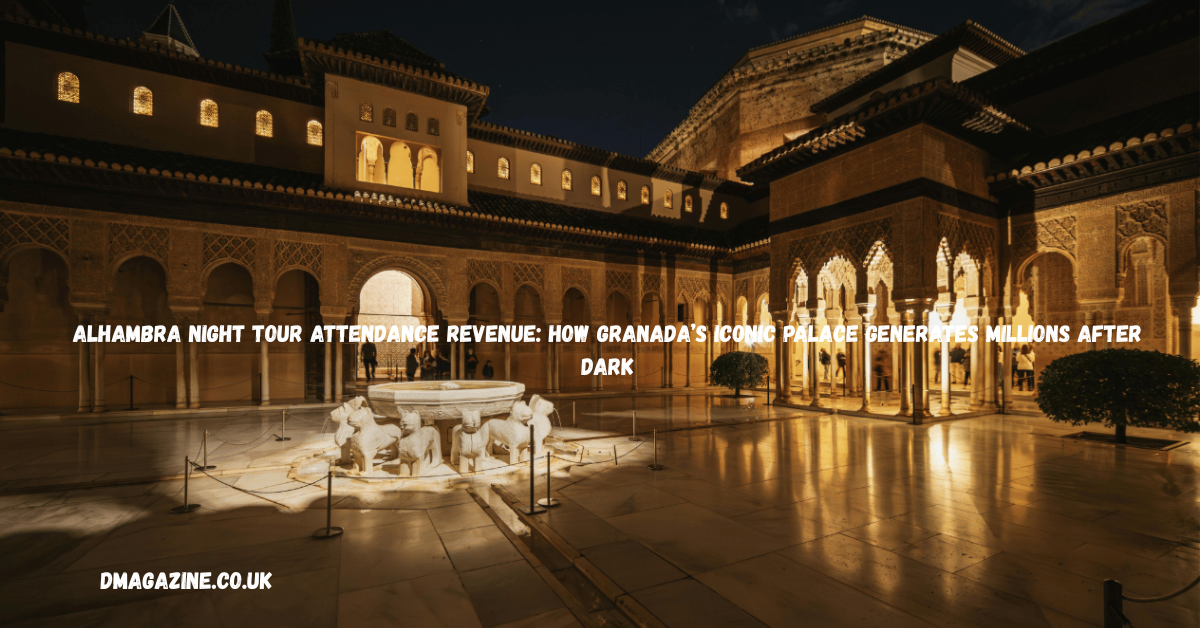
The Alhambra Palace in Granada, Spain, is one of the most iconic historic monuments in Europe, welcoming millions of visitors annually. While daytime visits dominate overall footfall, it’s the Alhambra night tour attendance revenue that tells a fascinating story of exclusivity, strategic pricing, conservation funding, and cultural tourism economics. With the palace’s breathtaking architecture bathed in soft lighting after sunset, night tours have become one of the most compelling experiences a traveler can book. But beyond the beauty, these tours generate millions of euros and play a vital role in sustaining the heritage site. In this deep dive, we will cover every aspect of Alhambra night tour attendance revenue — from attendance trends and pricing structures to economic impact, challenges, and future growth prospects.
Introduction
The Alhambra Palace is a UNESCO World Heritage site and a crown jewel of Andalusian history. Each year, approximately 2.7–3 million visitors come to explore its palaces, gardens, and fortifications. But tucked beneath the towering halls and gardens is a lucrative yet intentionally limited segment of tourism: night tours. These tours not only offer visitors a magical experience after dark but also contribute significantly to the overall revenue model of the Alhambra. Understanding night tour attendance revenue provides insight into how historic sites can balance visitor demand, financial sustainability, and heritage conservation.
Understanding Alhambra Night Tours
Alhambra night tours are not just extended visiting hours. They are distinct experiences designed around limited capacity, special lighting, and curated access to key attractions such as the Nasrid Palaces, Generalife Gardens, and other selected areas with protective lighting. The ambience at night is markedly different from daytime visits. Soft illumination highlights intricate mosaics and water features, creating an atmosphere that feels both serene and exclusive. This enhanced experience is a key driver behind the premium price point and high demand for night tickets. Unlike daytime access, night tours run on a fixed schedule and often only on specific days of the week and during particular months — a factor that also influences attendance revenue.
Total Annual Attendance
To understand the financial significance of night tours, it’s vital to place them within the broader context of Alhambra total visitation: Total annual visitors: ~2.7–3 million (all visits combined), Night tour attendance: Approx. 120,000–150,000 visitors annually — roughly 5–6% of total visitation. Even though night tours represent a small fraction of overall visitors, they are strategically meaningful because of the value per visitor and how revenue contributes to the palace’s operating budget.
Ticket Pricing and Premium Experience
The revenue from night tours begins with ticket pricing, which is intentionally structured to reflect the scarcity and quality of the experience. Standard Night Tour Tickets: Nasrid Palaces night visit: ~€12–€13 per person, Generalife Gardens night visit: ~€8 per person. Premium Options: Guided night tours and audio guides with commentary, small-group private tours with higher rates, bundled add-ons with photography opportunities or special access. These offerings attract visitors who are willing to pay more for depth, exclusivity, and personalization, boosting overall revenue. Compared to standard daytime tickets, night tours often yield higher revenue per visitor, not just from ticket sales but also from associated services.
Revenue Breakdown
Combining attendance figures with ticket pricing gives us a clearer picture of how much revenue Alhambra night tours generate. Estimated Annual Revenue: Based on attendance and pricing figures: €8 million to €12 million per year from night tour ticket sales alone. This revenue stream accounts for a substantial 15–20% of the Alhambra’s total ticket revenue, despite night tours representing just a small portion of overall visitors. Additional Revenue Streams: Beyond direct ticket sales, night tours generate revenue through guided tour premiums, audio guide rentals, VIP and private group bookings, and ancillary spending on souvenirs and local services. For example, premium guided experiences can range significantly higher in per-visitor revenue than regular tickets, adding considerable financial uplift to the base revenue.
Seasonal & Peak Attendance Patterns
Attendance for night tours is not spread evenly across the year. It mirrors broader tourism trends in Granada. High Attendance: Spring (April–June), Summer (July–September). These months attract the highest demand due to pleasant weather, longer evenings, and holiday travel peaks. Many night tour sessions sell out weeks in advance. Shoulder Season: Autumn (October) — still strong attendance but slightly reduced compared to summer. Low Attendance: Winter months (excluding holiday spikes). Demand remains lower due to shorter nights and cooler weather, although holiday periods such as Christmas can see temporary boosts. Seasonality affects revenue and capacity planning — a key factor in forecasting and maximizing income from night tours.
Visitor Profiles
Understanding who attends night tours helps explain spending patterns and visitor behavior. International Tourists: The majority of night tour visitors are international travelers, drawn by the unique ambiance and photography opportunities. Repeat and Experience-Driven Visitors: A meaningful share of attendees are repeat visitors — those who have experienced the palace during the day and return at night for a more intimate experience. Interest Groups: Photography enthusiasts, couples seeking a romantic experience, cultural heritage travelers. These segments often spend more on premium experiences and ancillary services, further boosting the financial value of night tours.
Economic Impact on Granada
Alhambra night tour attendance revenue has a ripple effect on Granada’s broader tourism economy: Hotel bookings: Night tour visitors are more likely to stay overnight, increasing occupancy rates. Restaurants and bars: Evening dining experiences are more frequent among night tour attendees. Local shops and services: Souvenir shops and cultural venues benefit from extended tourist activity. Night tour revenue doesn’t just enrich the palace; it forms part of the economic backbone of Granada’s cultural tourism ecosystem.
Operational Costs of Night Tours
While night tours generate significant revenue, they also incur specialized operational costs. Lighting Infrastructure: Night lighting systems must protect delicate historic structures and materials, requiring energy-efficient yet gentle illumination technology. Staffing: Night operations require dedicated staff for security and crowd control, lighting and equipment management, guided tours, and visitor assistance. These operational costs are higher than daytime staffing due to night shifts and specialized duties.
Comparison: Night Tours vs Daytime Visits
A direct comparison reveals how night tours complement daytime operations:
| Feature | Daytime Visits | Night Tours |
|---|---|---|
| Total Visitors | Millions/year | Hundreds of thousands |
| Ticket Price | Lower average | Higher premium |
| Operational Duration | All day | Limited evening hours |
| Revenue Per Visitor | Moderate | High |
| Visitor Experience | Crowded & full exploration | Quiet & atmospheric |
Although daytime visits generate larger total revenue due to sheer volume, night tours deliver higher revenue per visitor and greater profit margins relative to operational costs.
Challenges & Limitations
Despite their success, night tours come with limitations. Capacity Limits: Strict conservation regulations cap the number of night visitors to protect fragile spaces and control wear and tear. Weather & Seasonality: Rain or adverse weather can reduce attendance and therefore revenue. Booking Constraints: Limited schedules and high demand mean tickets often sell out quickly, requiring advanced planning from visitors. These factors constrain how much night tour attendance revenue can grow — intentionally prioritizing preservation over volume.
Strategies for Increasing Attendance & Revenue
Despite capacity constraints, the Alhambra management can explore strategies to enhance revenue. Dynamic Pricing: Adjusting prices based on demand can maximize revenue during peak periods while keeping tickets accessible in off-peak times. Bundled Offers: Combining night tours with dining, performances, or cultural experiences can increase total visitor spend. Marketing & SEO: An enhanced online presence and partnerships with travel platforms can improve visibility and advance bookings. These strategies aim to balance revenue optimization with preservation priorities.
Future Projections
Industry trends suggest night tour revenue at Alhambra could continue to grow modestly over the next few years, driven by rising international tourism demand, technological enhancements in visitor services, and premium experience offerings such as specialized illuminated tours. Experts predict night tour revenue could exceed €10 million annually within the next few years, making it one of the most economically resilient segments of the Alhambra’s operations.
Conservation & Sustainable Reinvestment
A crucial element of Alhambra night tour attendance revenue is how it’s used. Conservation Projects: Funds support restoration of fragile historic areas. Operational Upgrades: Lighting, visitor safety systems, and maintenance. Educational Programs: Scholarships, research, and visitor learning initiatives. By reinvesting revenue into conservation, the Alhambra ensures its long-term preservation while remaining financially sustainable.
FAQs
Q: How much does an Alhambra night tour cost?
A: Standard night tour tickets range from approximately €8–€13 per person, with premium guided and private options commanding higher prices.
Q: How many people attend night tours annually?
A: Night tour attendance is estimated at 120,000–150,000 visitors per year.
Q: How much revenue do these tours generate?
A: Night tours contribute an estimated €8 million to €12 million annually.
Q: Why are night tour tickets more expensive?
A: The premium pricing reflects exclusivity, limited capacity, and the enhanced visitor experience.
Q: Are night tours worth it?
A: Most visitors find night tours highly worthwhile due to the serene atmosphere, unique lighting, and smaller crowds.
Conclusion
The Alhambra night tour attendance revenue story is an example of how a world-heritage site can balance commercial success and cultural preservation. Despite representing a small share of total visitors, night tours contribute disproportionately to revenue through premium pricing, ancillary services, and a strong international visitor base. These revenues help protect this architectural masterpiece for future generations while enhancing the economic vitality of Granada’s tourism sector. Night tours are not just memorable experiences — they are a strategic engine powering both cultural stewardship and sustainable tourism revenue.






Leave a Reply