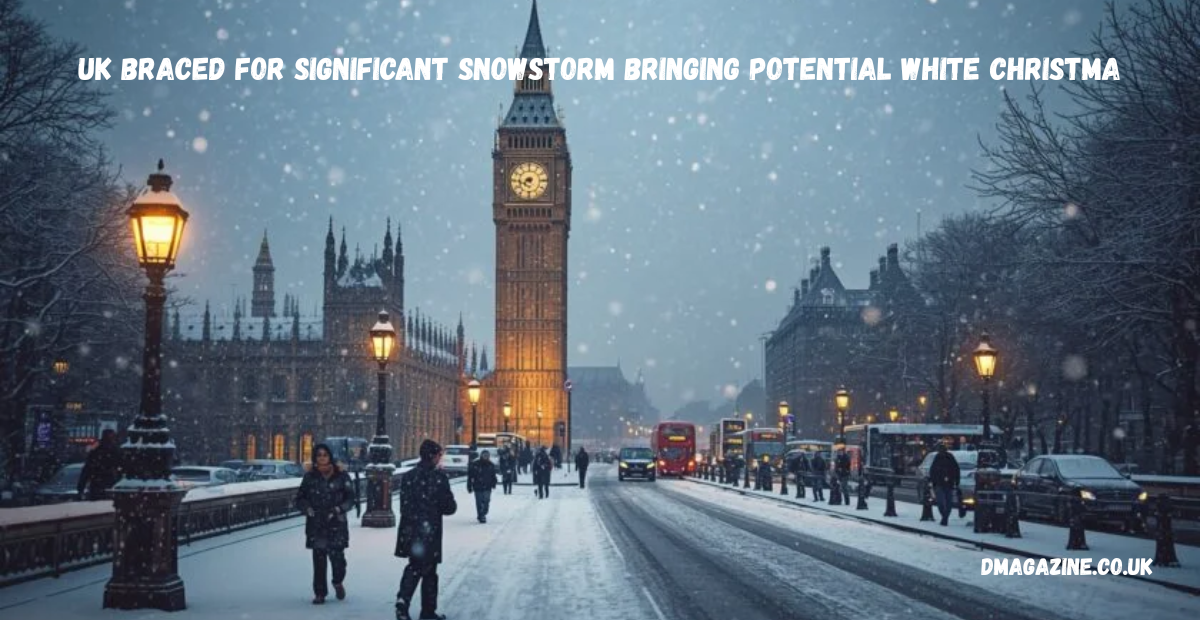
As the festive season unfolds, the United Kingdom finds itself in the grip of a dramatic shift in weather conditions — one that could well define the story of Christmas 2025. Across social media timelines and weather apps, discussions of snow, frost, and the long‑held dream of a White Christmas have surged, prompting widespread anticipation and concern from weather enthusiasts and residents alike.
While long-range forecasts currently lean toward cold and settled conditions with a chance of light wintry showers, the broader winter picture for the UK remains dynamic and uncertain. For many, the vision of snow-dusted streets, frozen landscapes, and the possibility of snow on Christmas Day represents a nostalgic seasonal ideal. But will this momentous winter weather event — driven by Arctic air and turbulent atmospheric patterns — materialize in time for Christmas Day?
In this comprehensive guide, we break down the forecasts, historical patterns, regional risks, safety advice, and what to expect as the UK braces itself against a potentially significant snowstorm — and the tantalizing possibility of a White Christmas.
Sudden Shift in UK Weather Patterns
After an unusually mild start to December, the UK’s weather patterns have taken a noticeable turn. Meteorologists are tracking a broad influx of Arctic air that is expected to envelop much of northern Europe and bring colder-than-average temperatures across the British Isles. Although widespread and impactful snow remains uncertain, this change signals one of the coldest late-December periods in recent years.
The key driver behind this shift is a disturbance in the polar vortex, a large area of low pressure and cold air surrounding the Earth’s poles. When the vortex weakens or destabilizes, pockets of frigid air can break off and plunge into mid-latitude regions like the UK, increasing both the chance of snowfall and a significant drop in temperatures.
This Arctic blast — coupled with high-pressure systems lingering over the North Atlantic — sets the stage for chilly daytime conditions and freezing nights, particularly across Scotland, Northern Ireland, and northern England. Temperatures across the nation are forecast to hover well below seasonal norms, with many areas dipping close to, or below, freezing.
Arctic Blast Set to Sweep Across the Country
Forecasters have identified an incoming mass of cold air descending from the Arctic regions. Although not guaranteed to produce heavy snow, this air mass significantly increases the likelihood of frost, icy roads, and occasional wintry showers — especially over higher ground.
Role of the Polar Vortex in December 2025
The polar vortex’s influence is a central piece in this winter’s forecast. When it weakens, lobes of cold air can spill southwards into Europe, raising the probability of prolonged cold spells and even snow. While forecasting snow weeks in advance remains challenging, the current atmospheric signals suggest an extended period of frost and chill in the lead-up to Christmas.
Met Office Forecasts and Snowfall Predictions
The UK’s national weather service plays a pivotal role in long-range winter outlooks and holiday forecasts. According to recent updates, there is a chance of snow or sleet in some regions around Christmas Day — particularly over elevated terrain — but the overall pattern is expected to be predominantly dry and settled rather than one dominated by heavy snowfall.
Predicted Snowfall Amounts by Region
Current forecasts do not indicate widespread snow accumulations across the UK, but specific regions may see localized wintry precipitation:
- Scottish Highlands: Elevated areas here remain the most likely to see snow, especially in the days leading up to Christmas.
- Northern England: Hillier areas may experience light snow showers or sleet.
- Midlands and Wales: Lower probability of significant snow, but icy conditions are possible.
- Southern England: Least likely to see snow, though high ground such as the South Downs could receive light flurries.
The Met Office emphasizes that a white Christmas technically only requires a single snowflake to be observed anywhere in the UK on December 25th, which keeps hopes open even if heavy snow does not materialize.
Timing of Snow Across Scotland, England, and Wales
While precise timing of snow events can only be forecast accurately within about five days of occurrence, the most consistent pattern points to wintry showers preceding Christmas Day, followed by cold, dry air dominating the holiday itself.
Temperature Drops and Freeze Risk
Across the UK, temperatures on Christmas Day are expected to be significantly lower than recent years — likely ranging between 0°C and 7°C during daytime, with nighttime lows dipping further.
Frost and black ice pose real hazards for pedestrians and motorists, especially during early mornings and evenings. Icy road surfaces could turn treacherous without proper precautions.
Regions Most Affected by the Snowstorm
The impact of winter weather will not be uniform across the UK. Certain regions are more vulnerable to snow and ice due to their geographic position and elevation.
Scottish Highlands: Heavy Snowfall and Blizzard Conditions
The Scottish Highlands consistently see the most intense winter weather in the UK owing to high terrain and proximity to moisture-laden Atlantic air. Snowfall and blizzards are common here during cold spells, and this freeze could bring significant snow on higher ground.
Even if lower elevations remain snow-free, higher regions like the Cairngorms can see several centimetres of snow that lasts through Christmas and beyond.
Northern England: Ice and Snow Accumulation
Parts of Northern England, particularly the Pennines and upland areas, are expected to experience occasional snow showers and freezing rain. This increases the risk of:
- Black ice on roads
- Reduced visibility
- Delays on rural routes
Frost and icy conditions could prove as disruptive as light snowfall in these areas.
Midlands and Wales: Travel Challenges
The Midlands and Wales might see a mix of rain, sleet, and occasional snow, particularly in higher spots. Travelers here should prepare for:
- Slippery roads
- Short-notice changes in weather conditions
- Slower public transport due to frost and ice
Southern England: Rare Chance of Snow
Southern England, historically the least snowy region of the UK, faces the lowest odds of widespread snow. However, coastal and elevated areas like the South Downs could see wintry precipitation if temperatures dip sufficiently.
Even here, though, snow that settles on the ground is considered unlikely by current forecasts.
Understanding the White Christmas Criteria and Probability
What Constitutes a White Christmas?
A White Christmas occurs when at least one snowflake is observed falling anywhere in the UK during the 24 hours of December 25th — even if snow doesn’t settle on the ground.
Historical White Christmas Patterns
Over the period from 1960 to recent years:
- Snow has been recorded somewhere in the UK on Christmas Day in over half of the years.
- However, widespread snow lying on the ground has been rare — recorded only in 1981, 1995, 2009, and 2010.
- The last true widespread White Christmas occurred in 2010, when 83% of stations reported snow on the ground.
- Technically, the most recent White Christmas was in 2023, when a small number of locations recorded snowfall, though none reported settled snow.
These patterns show that while a white holiday is not unprecedented, the kind of picture-postcard winter landscape people imagine is rare in modern climates.
Travel Disruptions and Daily Life Impacts
Road Safety and Black Ice Hazards
Black ice forms when temperatures hover around freezing and moisture freezes on road surfaces. It’s particularly common in shaded and rural areas, posing a significant danger to drivers and pedestrians alike.
Motorists are urged to:
- Slow down
- Avoid sudden braking
- Keep headlights on low beam
Public Transport Interruptions
With frost and potential snow showers, railway lines and signaling systems may experience delays or short-notice cancellations. Airports across the UK are preparing de-icing operations to prevent disruptions at key hubs.
Commuters and travelers should check live updates with transport providers and consider flexible bookings around Christmas Eve and Christmas Day itself.
School Closures and Workplace Adjustments
Local authorities hold discretionary powers to close schools or adjust schedules if weather conditions deteriorate significantly. Parents are advised to monitor council updates and make contingency plans for childcare or remote work if needed.
Government and Emergency Response Plans
National and local government agencies work year-round to prepare for winter weather events. This includes:
- Winter maintenance plans for roads and motorways
- Emergency service readiness
- Stockpiling grit and snow clearance equipment
- Public health advisories for vulnerable populations
Public health agencies also issue cold health alerts in parts of the UK to warn vulnerable groups — such as the elderly or chronically ill — of increased risks during extremely low temperatures.
Hospitals and Healthcare Services Preparedness
Healthcare providers anticipate higher demand for cold-related illnesses and injuries during winter weather. Hospitals often prepare by:
- Increasing staff availability
- Stocking essential winter medicines and supplies
- Coordinating with emergency services for rapid response
These measures are crucial for maintaining services during peak winter stress periods.
Expert Predictions: Could This Winter Be Historically Cold?
Meteorologists studying large-scale patterns affirm that the UK’s winter in late 2025 could be colder and more persistent than in recent years due to factors like Arctic air intrusions and blocked weather systems that prevent milder Atlantic air from taking over.
Some forecasters draw parallels with past cold spells, while noting that climate change has generally reduced the average number of snowy days in December.
Still, atmospheric models continue to monitor potential shifts that could amplify wintry conditions — especially in the lead-up to, and possibly beyond, Christmas.
Preparing for the Snowstorm: Practical Advice for Households
Home Readiness and Essential Supplies
Residents are advised to take steps to prepare their homes and families for potential cold weather challenges:
- Service heating systems before the coldest months hit
- Stockpile non-perishable food, bottled water, and medicines for several days
- Ensure pipes are insulated to prevent freezing and bursting
- Check home insurance policies to confirm coverage for winter damage
These simple steps can help households maintain comfort and safety should snow or frost affect movement and infrastructure.
Check on Vulnerable Neighbors
Community resilience often hinges on neighborly support. Checking in on elderly or medically vulnerable people can prevent isolation and ensure quicker access to help if needed.
Vehicle and Travel Preparations
For anyone planning travel during the festive period:
- Use winter or all-season tires
- Keep antifreeze levels topped up
- Carry an emergency kit (blankets, torch, food, water)
Flexible travel plans, including accommodations and last-minute changes, can help alleviate stress if weather impacts schedules.
Seasonal Festivities Amid Snow: Enjoying a White Christmas Safely
Despite all preparations and safety cautions, there’s no denying the allure of a White Christmas — building snowmen, sledging, and crisp winter photos. Should snow arrive, communities can still enjoy a wintry festive season, provided common-sense precautions are observed:
- Supervise children on icy hillsides
- Stay updated on local weather warnings
- Avoid unnecessary travel during alerts
Even light snow can create memorable holiday moments when safety is kept first in everyone’s plans.
Historical Context and Future Outlook
While the UK has seen snowy Christmases many times over the centuries, widespread snow lying on Christmas Day remains a rarity in the modern climate era. The last truly snow-covered Christmas was 2010, making such events a cherished yet uncommon part of UK weather history.
Looking ahead, long-range forecasts suggest that after Christmas, cold, settled weather with frost and fog may continue into early January — even if widespread snowy conditions don’t materialize.
Conclusion:
As the UK stands on the edge of winter’s most anticipated period, forecasts indicate cold temperatures and a chance of wintry showers, but not yet a definitive picture of heavy snowfall or country-wide snow cover. However, the very possibility of a White Christmas has captured the public imagination and revived age-old seasonal dreams.
Whether it’s snow-flaked rooftops or just frost-covered lawns, the key is preparation — for travel, home safety, and community support.
With vigilant forecasting, seasonal safety planning by authorities, and proactive readiness by households, Christmas 2025 could prove to be one of the most talked-about festive weather seasons in recent memory — even if it falls short of the fairy-tale snowy scenes that many hope to see.






Leave a Reply